
SpaceX's Starship program has completed 13 integrated flight tests through July 2026, with Flight 13 marking the first V3 vehicle flight and successful suborbital deployment of operational Starlink V3 satellites. Trader sentiment remains split between fewer than five or five-to-six space-reaching launches for the full year, reflecting ongoing FAA licensing timelines, repeated challenges with Super Heavy booster recovery, and the shift toward Flight 14 as the first orbital attempt now targeted for September. Recent schedule slips from late August targets and scaled-back tower-catch plans highlight the technical and regulatory hurdles still limiting rapid iteration. Key catalysts ahead include successful orbital insertion, propellant transfer demonstrations, and any acceleration in launch cadence driven by V3 hardware improvements or NASA Artemis requirements, which could push totals higher if reusability milestones are achieved before year-end.
Experimental AI-generated summary referencing Polymarket data. This is not trading advice and plays no role in how this market resolves. · UpdatedHow many SpaceX Starship launches reach space in 2026?
How many SpaceX Starship launches reach space in 2026?
<5 47%
5-6 44%
7-8 2.9%
>16 2.4%
$505,266 Vol.
$505,266 Vol.
<5
48%
5-6
44%
7-8
3%
9-10
2%
11-12
2%
13-14
<1%
15-16
<1%
>16
2%
<5 47%
5-6 44%
7-8 2.9%
>16 2.4%
$505,266 Vol.
$505,266 Vol.
<5
48%
5-6
44%
7-8
3%
9-10
2%
11-12
2%
13-14
<1%
15-16
<1%
>16
2%
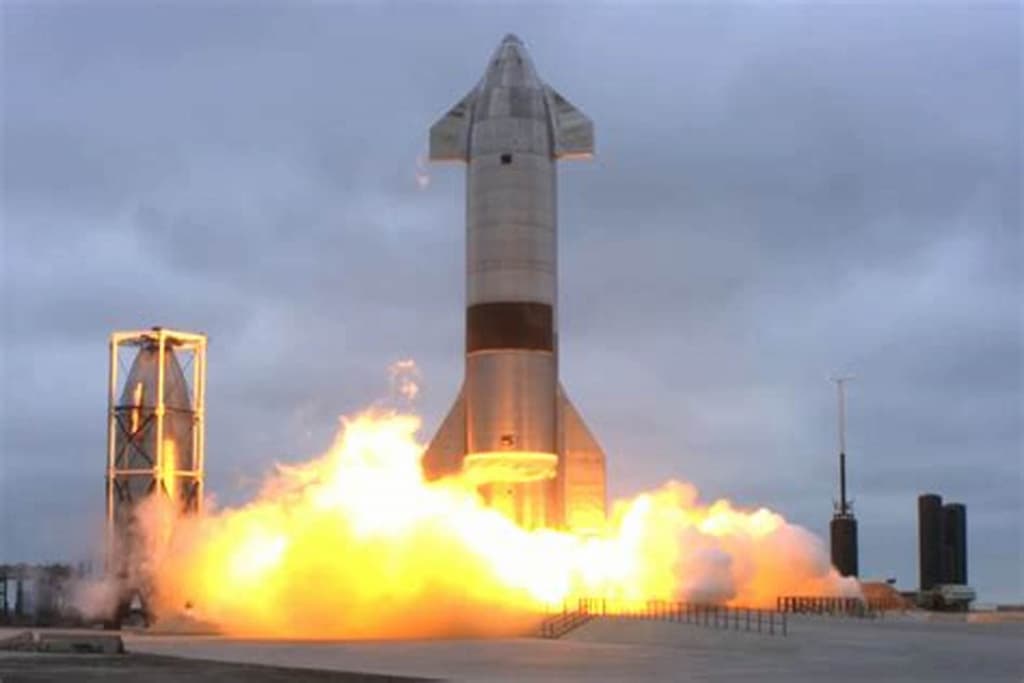
A successful launch is defined as the Starship taking off from its launchpad and reaching a minimum altitude of 62 miles above sea level. Any subsequent anomaly (e.g., an explosion) after the vehicle reaches 62 miles will have no bearing on the outcome.
The primary resolution source for this market will be SpaceX’s official video feed of the launches (e.g., via SpaceX YouTube Channel), as well as secondary video feeds or written reports if necessary. However, a consensus of credible reporting may also be used.
Market Opened: Dec 11, 2025, 7:39 PM ET
Resolver
0x2F5e3684c...A successful launch is defined as the Starship taking off from its launchpad and reaching a minimum altitude of 62 miles above sea level. Any subsequent anomaly (e.g., an explosion) after the vehicle reaches 62 miles will have no bearing on the outcome.
The primary resolution source for this market will be SpaceX’s official video feed of the launches (e.g., via SpaceX YouTube Channel), as well as secondary video feeds or written reports if necessary. However, a consensus of credible reporting may also be used.
Resolver
0x2F5e3684c...SpaceX's Starship program has completed 13 integrated flight tests through July 2026, with Flight 13 marking the first V3 vehicle flight and successful suborbital deployment of operational Starlink V3 satellites. Trader sentiment remains split between fewer than five or five-to-six space-reaching launches for the full year, reflecting ongoing FAA licensing timelines, repeated challenges with Super Heavy booster recovery, and the shift toward Flight 14 as the first orbital attempt now targeted for September. Recent schedule slips from late August targets and scaled-back tower-catch plans highlight the technical and regulatory hurdles still limiting rapid iteration. Key catalysts ahead include successful orbital insertion, propellant transfer demonstrations, and any acceleration in launch cadence driven by V3 hardware improvements or NASA Artemis requirements, which could push totals higher if reusability milestones are achieved before year-end.
Experimental AI-generated summary referencing Polymarket data. This is not trading advice and plays no role in how this market resolves. · Updated
Beware of external links.
Beware of external links.
Frequently Asked Questions