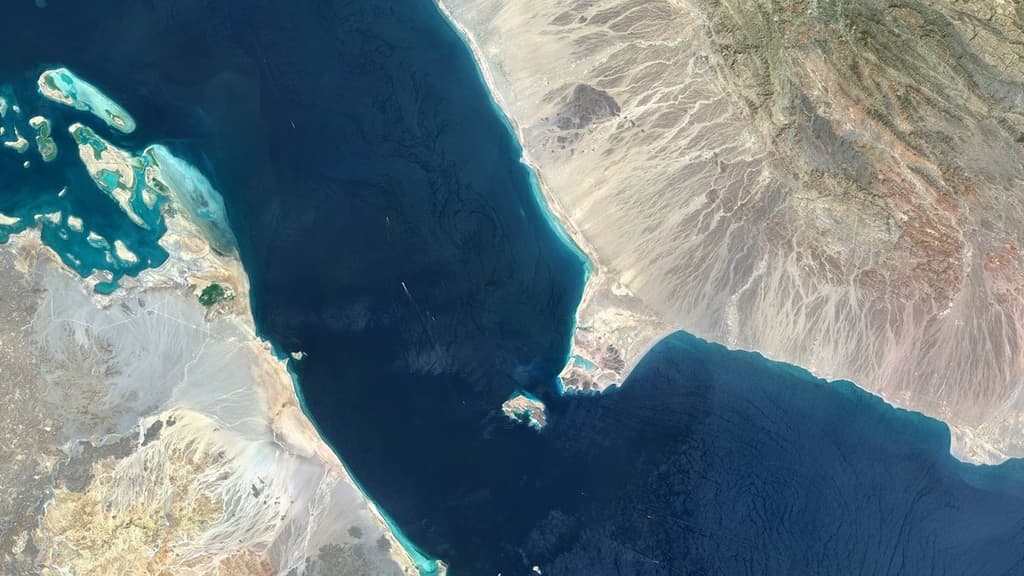
**Ongoing Houthi threats and the July 20, 2026, blockade declaration on Saudi-linked shipping continue to suppress and distort Bab el-Mandeb traffic, creating the tight contest between the 180-199 and 200-219 weekly bins.** Persistent attacks—such as the August 24 strike on the Bahri VLCC *Amzan* off Yanbu—have elevated war-risk premiums (now around 0.75-1% of hull value for Red Sea calls) and prompted more vessels, especially tankers, to reroute via the Cape of Good Hope or transit dark with AIS transponders off. This reduces visible commercial flows while inflating the share of sanctioned, shadow, and ballast movements. Recent data illustrate the volatility: MarineTraffic recorded 269 crossings in the week ending around August 24 (up slightly week-over-week but with laden transits shifting and dark activity notable), while Kpler and JMIC daily snapshots show commodity-vessel counts fluctuating between roughly 30-40 per day amid 36-76 transits in 48-72 hour windows. Container and bulker traffic has held steadier than tankers, supporting Suez Canal recovery (up to post-2024 highs but still ~40% below pre-Houthi baselines), yet overall commercial representativeness remains low. Traders weigh these incomplete counts against potential last-minute catalysts like new attacks, insurance adjustments, or any de-escalation signals. The near-even odds between the top two bins reflect this data opacity and the narrow range of plausible weekly totals under current risk dynamics, with lower bins discounted due to resilient non-tanker flows and higher bins limited by ongoing rerouting incentives.
Experimental AI-generated summary referencing Polymarket data. This is not trading advice and plays no role in how this market resolves. · UpdatedHow many ships transit Bab el-Mandeb Strait week of August 24?
How many ships transit Bab el-Mandeb Strait week of August 24?
180-199 35%
200-219 34%
220+ 19%
160-179 11%
$15,837 Vol.
$15,837 Vol.
<160
5%
160-179
11%
180-199
35%
200-219
34%
220+
19%
180-199 35%
200-219 34%
220+ 19%
160-179 11%
$15,837 Vol.
$15,837 Vol.
<160
5%
160-179
11%
180-199
35%
200-219
34%
220+
19%
Transit calls include container, dry bulk, roll-on/roll-off, general cargo, and tanker ships. Ships not reported by IMF Portwatch will not be considered.
This market will resolve as soon as all relevant data has been published. If the relevant data is not published within 14 calendar days of the specified date, this market will resolve based on the most recent data published up to that point.
In case of obvious data integrity issues (i.e., erroneous data), the market may remain open until the end of the third calendar day (ET) after the date on which such data is first released to allow for corrections. Data integrity issues refer only to clerical or other similar errors in the underlying data, and do not include cases where IMF Portwatch differs from alternative sources.
Only revisions to previously published data points made before all relevant data has been published will be considered.
The resolution source for this market will be IMF PortWatch, specifically the “Arrivals of Ships” data published for the Bab el-Mandeb Strait at https://portwatch.imf.org/pages/6b1814d64903461b98144a6cc25eb79c.
Market Opened: Aug 21, 2026, 3:08 PM ET
Resolver
0x69c47De9D...Transit calls include container, dry bulk, roll-on/roll-off, general cargo, and tanker ships. Ships not reported by IMF Portwatch will not be considered.
This market will resolve as soon as all relevant data has been published. If the relevant data is not published within 14 calendar days of the specified date, this market will resolve based on the most recent data published up to that point.
In case of obvious data integrity issues (i.e., erroneous data), the market may remain open until the end of the third calendar day (ET) after the date on which such data is first released to allow for corrections. Data integrity issues refer only to clerical or other similar errors in the underlying data, and do not include cases where IMF Portwatch differs from alternative sources.
Only revisions to previously published data points made before all relevant data has been published will be considered.
The resolution source for this market will be IMF PortWatch, specifically the “Arrivals of Ships” data published for the Bab el-Mandeb Strait at https://portwatch.imf.org/pages/6b1814d64903461b98144a6cc25eb79c.
Resolver
0x69c47De9D...**Ongoing Houthi threats and the July 20, 2026, blockade declaration on Saudi-linked shipping continue to suppress and distort Bab el-Mandeb traffic, creating the tight contest between the 180-199 and 200-219 weekly bins.** Persistent attacks—such as the August 24 strike on the Bahri VLCC *Amzan* off Yanbu—have elevated war-risk premiums (now around 0.75-1% of hull value for Red Sea calls) and prompted more vessels, especially tankers, to reroute via the Cape of Good Hope or transit dark with AIS transponders off. This reduces visible commercial flows while inflating the share of sanctioned, shadow, and ballast movements. Recent data illustrate the volatility: MarineTraffic recorded 269 crossings in the week ending around August 24 (up slightly week-over-week but with laden transits shifting and dark activity notable), while Kpler and JMIC daily snapshots show commodity-vessel counts fluctuating between roughly 30-40 per day amid 36-76 transits in 48-72 hour windows. Container and bulker traffic has held steadier than tankers, supporting Suez Canal recovery (up to post-2024 highs but still ~40% below pre-Houthi baselines), yet overall commercial representativeness remains low. Traders weigh these incomplete counts against potential last-minute catalysts like new attacks, insurance adjustments, or any de-escalation signals. The near-even odds between the top two bins reflect this data opacity and the narrow range of plausible weekly totals under current risk dynamics, with lower bins discounted due to resilient non-tanker flows and higher bins limited by ongoing rerouting incentives.
Experimental AI-generated summary referencing Polymarket data. This is not trading advice and plays no role in how this market resolves. · Updated
Beware of external links.
Beware of external links.
Frequently Asked Questions