To trade in the US, go to polymarket.us

icon for Canada becomes EU Associate Member by...?

Canada becomes EU Associate Member by...?

icon for Canada becomes EU Associate Member by...?

Canada becomes EU Associate Member by...?

NEW
Dec 31, 2026
Polymarket

$940 Vol.

Polymarket

December 31, 2026

$577 Vol.

4%

June 30, 2027

$171 Vol.

41%

December 31, 2027

$193 Vol.

33%

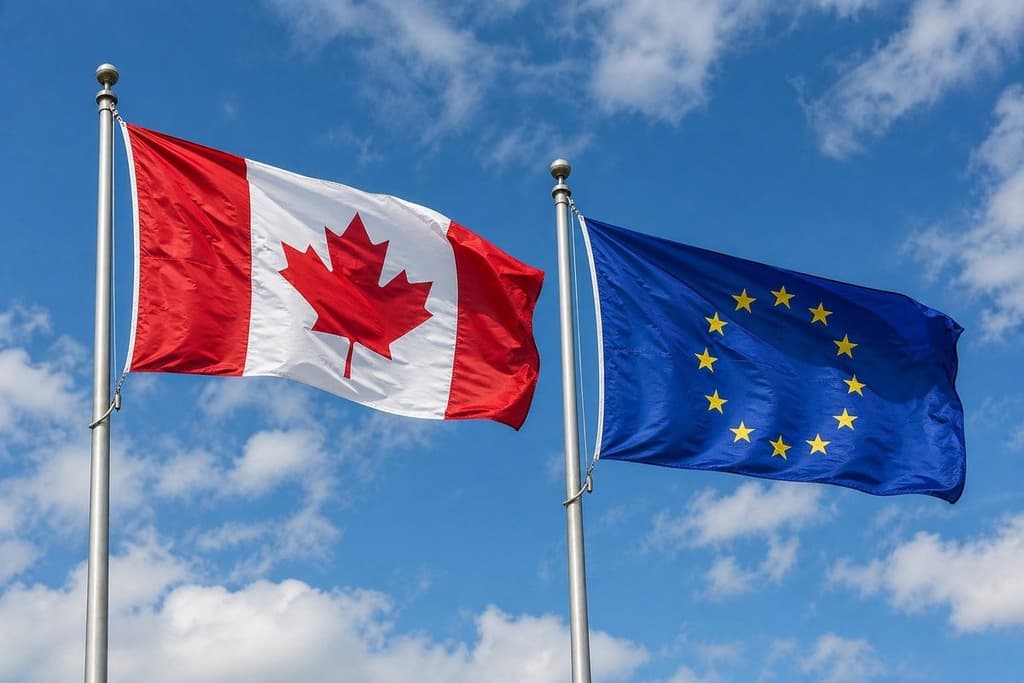
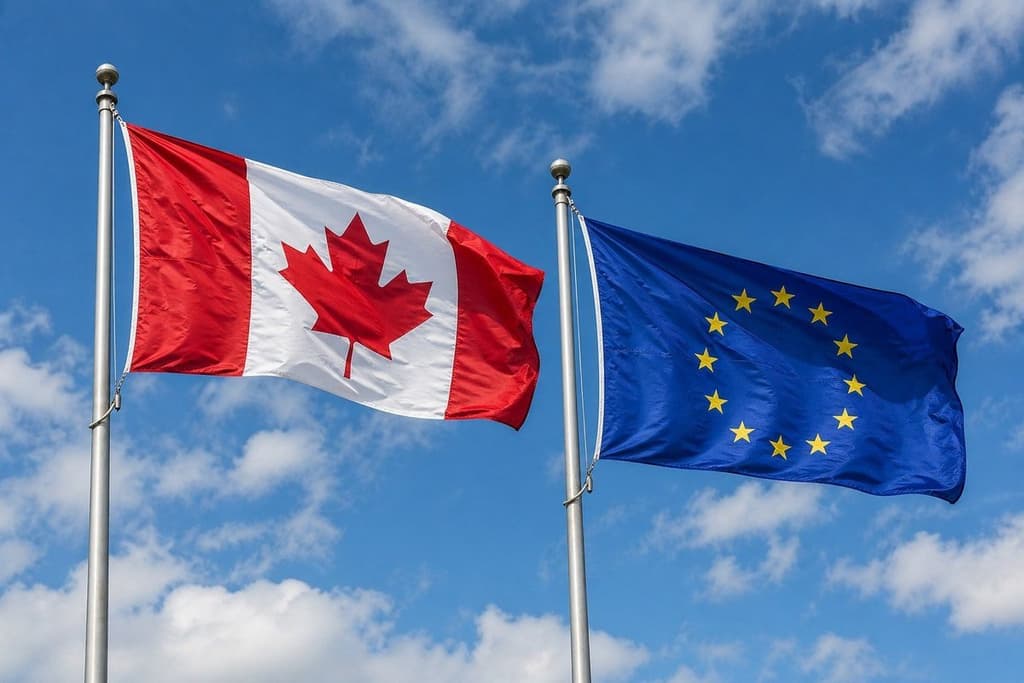
This market will resolve to "Yes" if Canada and the European Union sign or formally adopt a written diplomatic instrument that establishes an associate membership or equivalent status for Canada in relation to the European Union by the specified date, 11:59 PM ET. Otherwise, it will resolve to "No". An instrument establishes an associate membership or equivalent status if it is described in its own text as establishing associate membership, associate member status, or an equivalent formulation. Proposals, invitations, statements of intent, negotiations, or action by only one side do not qualify. Existing or sector-specific trade, defence, research, or mobility arrangements alone do not qualify. Unless the written instrument is formally adopted without signature as described below, the instrument must be signed by both Canada and the European Union (either as an institution or as a composite of its member states). Both parties must either sign the same document or sign individual documents that substantively and directly indicate acceptance of the same underlying instrument, regardless of minor formatting, wording, or translation differences between the signed versions. Both physical signatures and officially-issued electronic signatures will qualify as signatures. If the written instrument is recognized by Canada and the European Union as not requiring signature for execution, formal adoption of the instrument by both parties without signature will qualify. Formal adoption may be established by official actions, including: (i) an official joint statement announcing that Canada and the European Union have adopted, approved, executed, concluded, or otherwise finalized the instrument; (ii) mutual official confirmation that the same published instrument has been agreed to, adopted, approved, executed, or concluded by both parties; (iii) adoption, approval, or endorsement through an official resolution, ministerial decision, executive decision, or equivalent institutional act, where that act is the mechanism by which the relevant party adopts the instrument; or (iv) an exchange of official diplomatic notes or letters confirming acceptance of the same instrument. Whether an instrument qualifies will be primarily determined by its officially released text. A qualifying instrument must be signed or formally adopted by both Canada and the European Union by the specified date, 11:59 PM ET. If such an instrument is signed or formally adopted by that time, but the complete text has not been released within 28 days of adoption, official and definitive announcements from Canada and the European Union regarding the text, or a consensus of major news agencies of record, may be used to determine whether the instrument qualifies. If, on the specified date, the text of such an instrument has not been released and genuine material ambiguity remains as to whether it satisfies this market's requirements, settlement may be postponed to allow for 28 calendar days after the date of adoption to pass pending release of the text. Once a diplomatic instrument has been signed or formally adopted without signature by both Canada and the European Union and confirmed to satisfy the requirements of a qualifying written diplomatic instrument, this market's condition is met, regardless of whether the instrument later enters into force, is ratified, receives legislative or treaty consent, or is subsequently repudiated, withdrawn from, or not implemented by Canada or the European Union. The primary resolution sources for this market will be official information from Canada and the European Union and the officially released text of an instrument; however, a consensus of credible reporting may also be used.European Commission President Ursula von der Leyen proposed on September 16 that Canada become the EU’s first associate member during her State of the Union address, with Prime Minister Mark Carney in attendance and offering a positive response the following day. No such formal status exists in EU treaties, so any arrangement would require defining new terms, unanimous member-state approval, and potential ratification processes. Discussions center on upgrading the existing CETA trade deal into broader cooperation on defense industrial integration, critical minerals, energy security, AI, and Arctic projects. An EU-Canada summit scheduled for late October in Montreal offers the next concrete opportunity to advance talks, while U.S. trade tensions provide external context for both sides’ interest in closer ties. Trader sentiment reflects the early-stage nature of the proposal and significant procedural hurdles ahead.

This market will resolve to "Yes" if Canada and the European Union sign or formally adopt a written diplomatic instrument that establishes an associate membership or equivalent status for Canada in relation to the European Union by the specified date, 11:59 PM ET. Otherwise, it will resolve to "No".

An instrument establishes an associate membership or equivalent status if it is described in its own text as establishing associate membership, associate member status, or an equivalent formulation. Proposals, invitations, statements of intent, negotiations, or action by only one side do not qualify. Existing or sector-specific trade, defence, research, or mobility arrangements alone do not qualify.

Unless the written instrument is formally adopted without signature as described below, the instrument must be signed by both Canada and the European Union (either as an institution or as a composite of its member states). Both parties must either sign the same document or sign individual documents that substantively and directly indicate acceptance of the same underlying instrument, regardless of minor formatting, wording, or translation differences between the signed versions. Both physical signatures and officially-issued electronic signatures will qualify as signatures.

If the written instrument is recognized by Canada and the European Union as not requiring signature for execution, formal adoption of the instrument by both parties without signature will qualify. Formal adoption may be established by official actions, including: (i) an official joint statement announcing that Canada and the European Union have adopted, approved, executed, concluded, or otherwise finalized the instrument; (ii) mutual official confirmation that the same published instrument has been agreed to, adopted, approved, executed, or concluded by both parties; (iii) adoption, approval, or endorsement through an official resolution, ministerial decision, executive decision, or equivalent institutional act, where that act is the mechanism by which the relevant party adopts the instrument; or (iv) an exchange of official diplomatic notes or letters confirming acceptance of the same instrument.

Whether an instrument qualifies will be primarily determined by its officially released text. A qualifying instrument must be signed or formally adopted by both Canada and the European Union by the specified date, 11:59 PM ET. If such an instrument is signed or formally adopted by that time, but the complete text has not been released within 28 days of adoption, official and definitive announcements from Canada and the European Union regarding the text, or a consensus of major news agencies of record, may be used to determine whether the instrument qualifies. If, on the specified date, the text of such an instrument has not been released and genuine material ambiguity remains as to whether it satisfies this market's requirements, settlement may be postponed to allow for 28 calendar days after the date of adoption to pass pending release of the text.

Once a diplomatic instrument has been signed or formally adopted without signature by both Canada and the European Union and confirmed to satisfy the requirements of a qualifying written diplomatic instrument, this market's condition is met, regardless of whether the instrument later enters into force, is ratified, receives legislative or treaty consent, or is subsequently repudiated, withdrawn from, or not implemented by Canada or the European Union.

The primary resolution sources for this market will be official information from Canada and the European Union and the officially released text of an instrument; however, a consensus of credible reporting may also be used.
This market will resolve to "Yes" if Canada and the European Union sign or formally adopt a written diplomatic instrument that establishes an associate membership or equivalent status for Canada in relation to the European Union by the specified date, 11:59 PM ET. Otherwise, it will resolve to "No". An instrument establishes an associate membership or equivalent status if it is described in its own text as establishing associate membership, associate member status, or an equivalent formulation. Proposals, invitations, statements of intent, negotiations, or action by only one side do not qualify. Existing or sector-specific trade, defence, research, or mobility arrangements alone do not qualify. Unless the written instrument is formally adopted without signature as described below, the instrument must be signed by both Canada and the European Union (either as an institution or as a composite of its member states). Both parties must either sign the same document or sign individual documents that substantively and directly indicate acceptance of the same underlying instrument, regardless of minor formatting, wording, or translation differences between the signed versions. Both physical signatures and officially-issued electronic signatures will qualify as signatures. If the written instrument is recognized by Canada and the European Union as not requiring signature for execution, formal adoption of the instrument by both parties without signature will qualify. Formal adoption may be established by official actions, including: (i) an official joint statement announcing that Canada and the European Union have adopted, approved, executed, concluded, or otherwise finalized the instrument; (ii) mutual official confirmation that the same published instrument has been agreed to, adopted, approved, executed, or concluded by both parties; (iii) adoption, approval, or endorsement through an official resolution, ministerial decision, executive decision, or equivalent institutional act, where that act is the mechanism by which the relevant party adopts the instrument; or (iv) an exchange of official diplomatic notes or letters confirming acceptance of the same instrument. Whether an instrument qualifies will be primarily determined by its officially released text. A qualifying instrument must be signed or formally adopted by both Canada and the European Union by the specified date, 11:59 PM ET. If such an instrument is signed or formally adopted by that time, but the complete text has not been released within 28 days of adoption, official and definitive announcements from Canada and the European Union regarding the text, or a consensus of major news agencies of record, may be used to determine whether the instrument qualifies. If, on the specified date, the text of such an instrument has not been released and genuine material ambiguity remains as to whether it satisfies this market's requirements, settlement may be postponed to allow for 28 calendar days after the date of adoption to pass pending release of the text. Once a diplomatic instrument has been signed or formally adopted without signature by both Canada and the European Union and confirmed to satisfy the requirements of a qualifying written diplomatic instrument, this market's condition is met, regardless of whether the instrument later enters into force, is ratified, receives legislative or treaty consent, or is subsequently repudiated, withdrawn from, or not implemented by Canada or the European Union. The primary resolution sources for this market will be official information from Canada and the European Union and the officially released text of an instrument; however, a consensus of credible reporting may also be used.
Volume
$940
End Date
Jul 1, 2027
Market Opened
Sep 17, 2026, 12:08 PM ET
This market will resolve to "Yes" if Canada and the European Union sign or formally adopt a written diplomatic instrument that establishes an associate membership or equivalent status for Canada in relation to the European Union by the specified date, 11:59 PM ET. Otherwise, it will resolve to "No". An instrument establishes an associate membership or equivalent status if it is described in its own text as establishing associate membership, associate member status, or an equivalent formulation. Proposals, invitations, statements of intent, negotiations, or action by only one side do not qualify. Existing or sector-specific trade, defence, research, or mobility arrangements alone do not qualify. Unless the written instrument is formally adopted without signature as described below, the instrument must be signed by both Canada and the European Union (either as an institution or as a composite of its member states). Both parties must either sign the same document or sign individual documents that substantively and directly indicate acceptance of the same underlying instrument, regardless of minor formatting, wording, or translation differences between the signed versions. Both physical signatures and officially-issued electronic signatures will qualify as signatures. If the written instrument is recognized by Canada and the European Union as not requiring signature for execution, formal adoption of the instrument by both parties without signature will qualify. Formal adoption may be established by official actions, including: (i) an official joint statement announcing that Canada and the European Union have adopted, approved, executed, concluded, or otherwise finalized the instrument; (ii) mutual official confirmation that the same published instrument has been agreed to, adopted, approved, executed, or concluded by both parties; (iii) adoption, approval, or endorsement through an official resolution, ministerial decision, executive decision, or equivalent institutional act, where that act is the mechanism by which the relevant party adopts the instrument; or (iv) an exchange of official diplomatic notes or letters confirming acceptance of the same instrument. Whether an instrument qualifies will be primarily determined by its officially released text. A qualifying instrument must be signed or formally adopted by both Canada and the European Union by the specified date, 11:59 PM ET. If such an instrument is signed or formally adopted by that time, but the complete text has not been released within 28 days of adoption, official and definitive announcements from Canada and the European Union regarding the text, or a consensus of major news agencies of record, may be used to determine whether the instrument qualifies. If, on the specified date, the text of such an instrument has not been released and genuine material ambiguity remains as to whether it satisfies this market's requirements, settlement may be postponed to allow for 28 calendar days after the date of adoption to pass pending release of the text. Once a diplomatic instrument has been signed or formally adopted without signature by both Canada and the European Union and confirmed to satisfy the requirements of a qualifying written diplomatic instrument, this market's condition is met, regardless of whether the instrument later enters into force, is ratified, receives legislative or treaty consent, or is subsequently repudiated, withdrawn from, or not implemented by Canada or the European Union. The primary resolution sources for this market will be official information from Canada and the European Union and the officially released text of an instrument; however, a consensus of credible reporting may also be used.European Commission President Ursula von der Leyen proposed on September 16 that Canada become the EU’s first associate member during her State of the Union address, with Prime Minister Mark Carney in attendance and offering a positive response the following day. No such formal status exists in EU treaties, so any arrangement would require defining new terms, unanimous member-state approval, and potential ratification processes. Discussions center on upgrading the existing CETA trade deal into broader cooperation on defense industrial integration, critical minerals, energy security, AI, and Arctic projects. An EU-Canada summit scheduled for late October in Montreal offers the next concrete opportunity to advance talks, while U.S. trade tensions provide external context for both sides’ interest in closer ties. Trader sentiment reflects the early-stage nature of the proposal and significant procedural hurdles ahead.

This market will resolve to "Yes" if Canada and the European Union sign or formally adopt a written diplomatic instrument that establishes an associate membership or equivalent status for Canada in relation to the European Union by the specified date, 11:59 PM ET. Otherwise, it will resolve to "No".

An instrument establishes an associate membership or equivalent status if it is described in its own text as establishing associate membership, associate member status, or an equivalent formulation. Proposals, invitations, statements of intent, negotiations, or action by only one side do not qualify. Existing or sector-specific trade, defence, research, or mobility arrangements alone do not qualify.

Unless the written instrument is formally adopted without signature as described below, the instrument must be signed by both Canada and the European Union (either as an institution or as a composite of its member states). Both parties must either sign the same document or sign individual documents that substantively and directly indicate acceptance of the same underlying instrument, regardless of minor formatting, wording, or translation differences between the signed versions. Both physical signatures and officially-issued electronic signatures will qualify as signatures.

If the written instrument is recognized by Canada and the European Union as not requiring signature for execution, formal adoption of the instrument by both parties without signature will qualify. Formal adoption may be established by official actions, including: (i) an official joint statement announcing that Canada and the European Union have adopted, approved, executed, concluded, or otherwise finalized the instrument; (ii) mutual official confirmation that the same published instrument has been agreed to, adopted, approved, executed, or concluded by both parties; (iii) adoption, approval, or endorsement through an official resolution, ministerial decision, executive decision, or equivalent institutional act, where that act is the mechanism by which the relevant party adopts the instrument; or (iv) an exchange of official diplomatic notes or letters confirming acceptance of the same instrument.

Whether an instrument qualifies will be primarily determined by its officially released text. A qualifying instrument must be signed or formally adopted by both Canada and the European Union by the specified date, 11:59 PM ET. If such an instrument is signed or formally adopted by that time, but the complete text has not been released within 28 days of adoption, official and definitive announcements from Canada and the European Union regarding the text, or a consensus of major news agencies of record, may be used to determine whether the instrument qualifies. If, on the specified date, the text of such an instrument has not been released and genuine material ambiguity remains as to whether it satisfies this market's requirements, settlement may be postponed to allow for 28 calendar days after the date of adoption to pass pending release of the text.

Once a diplomatic instrument has been signed or formally adopted without signature by both Canada and the European Union and confirmed to satisfy the requirements of a qualifying written diplomatic instrument, this market's condition is met, regardless of whether the instrument later enters into force, is ratified, receives legislative or treaty consent, or is subsequently repudiated, withdrawn from, or not implemented by Canada or the European Union.

The primary resolution sources for this market will be official information from Canada and the European Union and the officially released text of an instrument; however, a consensus of credible reporting may also be used.
This market will resolve to "Yes" if Canada and the European Union sign or formally adopt a written diplomatic instrument that establishes an associate membership or equivalent status for Canada in relation to the European Union by the specified date, 11:59 PM ET. Otherwise, it will resolve to "No". An instrument establishes an associate membership or equivalent status if it is described in its own text as establishing associate membership, associate member status, or an equivalent formulation. Proposals, invitations, statements of intent, negotiations, or action by only one side do not qualify. Existing or sector-specific trade, defence, research, or mobility arrangements alone do not qualify. Unless the written instrument is formally adopted without signature as described below, the instrument must be signed by both Canada and the European Union (either as an institution or as a composite of its member states). Both parties must either sign the same document or sign individual documents that substantively and directly indicate acceptance of the same underlying instrument, regardless of minor formatting, wording, or translation differences between the signed versions. Both physical signatures and officially-issued electronic signatures will qualify as signatures. If the written instrument is recognized by Canada and the European Union as not requiring signature for execution, formal adoption of the instrument by both parties without signature will qualify. Formal adoption may be established by official actions, including: (i) an official joint statement announcing that Canada and the European Union have adopted, approved, executed, concluded, or otherwise finalized the instrument; (ii) mutual official confirmation that the same published instrument has been agreed to, adopted, approved, executed, or concluded by both parties; (iii) adoption, approval, or endorsement through an official resolution, ministerial decision, executive decision, or equivalent institutional act, where that act is the mechanism by which the relevant party adopts the instrument; or (iv) an exchange of official diplomatic notes or letters confirming acceptance of the same instrument. Whether an instrument qualifies will be primarily determined by its officially released text. A qualifying instrument must be signed or formally adopted by both Canada and the European Union by the specified date, 11:59 PM ET. If such an instrument is signed or formally adopted by that time, but the complete text has not been released within 28 days of adoption, official and definitive announcements from Canada and the European Union regarding the text, or a consensus of major news agencies of record, may be used to determine whether the instrument qualifies. If, on the specified date, the text of such an instrument has not been released and genuine material ambiguity remains as to whether it satisfies this market's requirements, settlement may be postponed to allow for 28 calendar days after the date of adoption to pass pending release of the text. Once a diplomatic instrument has been signed or formally adopted without signature by both Canada and the European Union and confirmed to satisfy the requirements of a qualifying written diplomatic instrument, this market's condition is met, regardless of whether the instrument later enters into force, is ratified, receives legislative or treaty consent, or is subsequently repudiated, withdrawn from, or not implemented by Canada or the European Union. The primary resolution sources for this market will be official information from Canada and the European Union and the officially released text of an instrument; however, a consensus of credible reporting may also be used.
Volume
$940
End Date
Jul 1, 2027
Market Opened
Sep 17, 2026, 12:08 PM ET

Beware of external links.

Frequently Asked Questions

"Canada becomes EU Associate Member by...?" is a prediction market on Polymarket with 3 possible outcomes where traders buy and sell shares based on what they believe will happen. The current leading outcome is "June 30, 2027" at 41%, followed by "December 31, 2027" at 33%. Prices reflect real-time crowd-sourced probabilities. For example, a share priced at 41¢ implies that the market collectively assigns a 41% chance to that outcome. These odds shift continuously as traders react to new developments and information. Shares in the correct outcome are redeemable for $1 each upon market resolution.

"Canada becomes EU Associate Member by...?" is a newly created market on Polymarket, launched on Sep 17, 2026. As an early market, this is your opportunity to be among the first traders to set the odds and establish the market's initial price signals. You can also bookmark this page to track volume and trading activity as the market gains traction over time.

To trade on "Canada becomes EU Associate Member by...?," browse the 3 available outcomes listed on this page. Each outcome displays a current price representing the market's implied probability. To take a position, select the outcome you believe is most likely, choose "Yes" to trade in favor of it or "No" to trade against it, enter your amount, and click "Trade." If your chosen outcome is correct when the market resolves, your "Yes" shares pay out $1 each. If it's incorrect, they pay out $0. You can also sell your shares at any time before resolution if you want to lock in a profit or cut a loss.

The current frontrunner for "Canada becomes EU Associate Member by...?" is "June 30, 2027" at 41%, meaning the market assigns a 41% chance to that outcome. The next closest outcome is "December 31, 2027" at 33%. These odds update in real-time as traders buy and sell shares, so they reflect the latest collective view of what's most likely to happen. Check back frequently or bookmark this page to follow how the odds shift as new information emerges.

The resolution rules for "Canada becomes EU Associate Member by...?" define exactly what needs to happen for each outcome to be declared a winner — including the official data sources used to determine the result. You can review the complete resolution criteria in the "Rules" section on this page above the comments. We recommend reading the rules carefully before trading, as they specify the precise conditions, edge cases, and sources that govern how this market is settled.