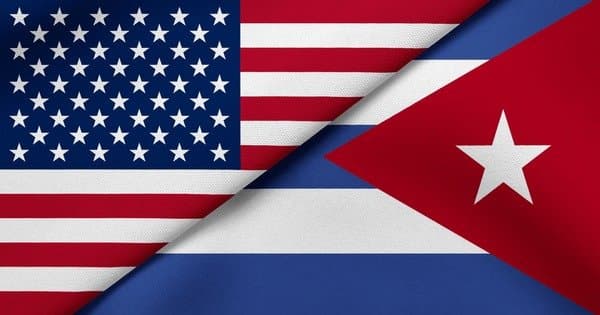
**Traders assign an 84.5% implied probability to no US-Cuba military clash in 2026 because US policy has emphasized sustained economic and diplomatic pressure over direct military engagement.** The Trump administration has imposed repeated sanctions on Cuban military-linked entities, officials, and industries while blocking oil deliveries, exacerbating Havana’s energy and economic crisis. Rhetoric from officials including Defense Secretary Pete Hegseth has kept military options “on the table,” and planning discussions have occurred, yet these have coincided with bilateral talks aimed at addressing differences through dialogue on security, economic issues, and reciprocity. Recent months show de-escalatory signals alongside the pressure campaign: US and Cuban military representatives held operational security discussions near Guantanamo Bay, and Cuban leaders have publicly confirmed ongoing exchanges with US counterparts facilitated by international actors. Broader US commitments elsewhere have limited available resources, and analysts note that the most plausible escalation window earlier in 2026 passed without kinetic action. No verified incidents of direct US-Cuban forces engaging have taken place, and the administration appears focused on coercive measures short of combat to extract concessions. With limited time remaining in the calendar year, these dynamics underpin the market’s strong consensus against a clash.
Experimental AI-generated summary referencing Polymarket data. This is not trading advice and plays no role in how this market resolves. · UpdatedUS x Cuba military clash in 2026?
US x Cuba military clash in 2026?
$241,161 Vol.
$241,161 Vol.
$241,161 Vol.
$241,161 Vol.
A "military encounter" is defined as any incident involving the use of force such as missile strikes, artillery fire, exchange of gunfire, or other forms of direct military engagement between US and Cuban military forces. Non-violent actions, such as warning shots, artillery fire into uninhabited areas, or missile launches that land in territorial waters or pass through airspace, will not qualify for a "Yes" resolution. Intentional ship ramming that results in significant damage to (e.g., a hole in the hull) or the sinking of a military ship by another will count toward a "Yes" resolution, however minor damage (scrapes, dents) will not.
Note: the United States Coast Guard is considered part of the United States military, and the Cuban Border Guard is considered part of the Cuban military.
The resolution source for this market will be a consensus of credible reporting.
Market Opened: Feb 25, 2026, 7:31 PM ET
Resolver
0x65070BE91...A "military encounter" is defined as any incident involving the use of force such as missile strikes, artillery fire, exchange of gunfire, or other forms of direct military engagement between US and Cuban military forces. Non-violent actions, such as warning shots, artillery fire into uninhabited areas, or missile launches that land in territorial waters or pass through airspace, will not qualify for a "Yes" resolution. Intentional ship ramming that results in significant damage to (e.g., a hole in the hull) or the sinking of a military ship by another will count toward a "Yes" resolution, however minor damage (scrapes, dents) will not.
Note: the United States Coast Guard is considered part of the United States military, and the Cuban Border Guard is considered part of the Cuban military.
The resolution source for this market will be a consensus of credible reporting.
Resolver
0x65070BE91...**Traders assign an 84.5% implied probability to no US-Cuba military clash in 2026 because US policy has emphasized sustained economic and diplomatic pressure over direct military engagement.** The Trump administration has imposed repeated sanctions on Cuban military-linked entities, officials, and industries while blocking oil deliveries, exacerbating Havana’s energy and economic crisis. Rhetoric from officials including Defense Secretary Pete Hegseth has kept military options “on the table,” and planning discussions have occurred, yet these have coincided with bilateral talks aimed at addressing differences through dialogue on security, economic issues, and reciprocity. Recent months show de-escalatory signals alongside the pressure campaign: US and Cuban military representatives held operational security discussions near Guantanamo Bay, and Cuban leaders have publicly confirmed ongoing exchanges with US counterparts facilitated by international actors. Broader US commitments elsewhere have limited available resources, and analysts note that the most plausible escalation window earlier in 2026 passed without kinetic action. No verified incidents of direct US-Cuban forces engaging have taken place, and the administration appears focused on coercive measures short of combat to extract concessions. With limited time remaining in the calendar year, these dynamics underpin the market’s strong consensus against a clash.
Experimental AI-generated summary referencing Polymarket data. This is not trading advice and plays no role in how this market resolves. · Updated


Beware of external links.
Beware of external links.
Frequently Asked Questions