
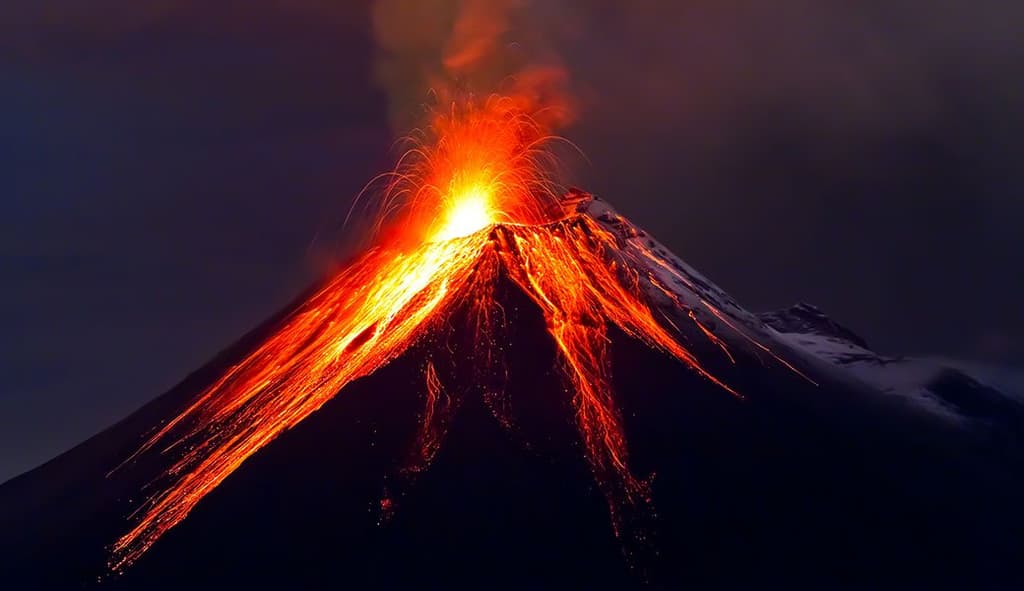
Recent monitoring by Italy’s INGV shows Mount Etna produced multiple phases of Strombolian activity, lava fountaining, and ash plumes reaching 7 km during June–July and early-to-mid August 2026, with lava flows descending into the Valle del Bove before activity declined sharply by late August. These events have kept volcanic tremor in the medium-to-high range and sustained minor ash emissions from the Northeast Crater, yet official VEI assignments for 2026 remain pending amid fluctuating effusion rates and model variability in plume height and erupted volume. The near-even odds reflect genuine uncertainty over whether any single episode will ultimately meet the VEI 2 threshold (plume 1–5 km, modest tephra volume) or whether renewed paroxysmal episodes will develop before year-end, with traders closely watching upcoming INGV bulletins and seismic trends for decisive shifts in activity.
Experimental AI-generated summary referencing Polymarket data. This is not trading advice and plays no role in how this market resolves. · UpdatedEtna eruption with VEI 2+ in 2026?
Etna eruption with VEI 2+ in 2026?
The primary resolution source will be the Smithsonian Institution Global Volcanism Program (GVP: https://volcano.si.edu/), including the 2026 eruptions page (https://volcano.si.edu/faq/index.cfm?question=eruptionsbyyear&checkyear=2026).
This market will resolve as soon as a qualifying eruption occurs, or once December 31, 2026, 11:59 PM ET has passed and no qualifying eruption has occurred. If there is an ongoing Etna eruption at that time, this market may remain open for an additional 14 calendar days to verify the VEI rating of the ongoing eruption.
If the Smithsonian GVP becomes permanently unavailable, or if an ongoing eruption has not been assigned a VEI rating within 14 calendar days of December 31, 2026, this market may resolve based on a consensus of credible scientific sources, including the U.S. Geological Survey (USGS), national or regional volcanic observatories, or credible reporting of a scientific consensus.
Market Opened: Apr 21, 2026, 3:33 PM ET
Resolver
0x65070BE91...The primary resolution source will be the Smithsonian Institution Global Volcanism Program (GVP: https://volcano.si.edu/), including the 2026 eruptions page (https://volcano.si.edu/faq/index.cfm?question=eruptionsbyyear&checkyear=2026).
This market will resolve as soon as a qualifying eruption occurs, or once December 31, 2026, 11:59 PM ET has passed and no qualifying eruption has occurred. If there is an ongoing Etna eruption at that time, this market may remain open for an additional 14 calendar days to verify the VEI rating of the ongoing eruption.
If the Smithsonian GVP becomes permanently unavailable, or if an ongoing eruption has not been assigned a VEI rating within 14 calendar days of December 31, 2026, this market may resolve based on a consensus of credible scientific sources, including the U.S. Geological Survey (USGS), national or regional volcanic observatories, or credible reporting of a scientific consensus.
Resolver
0x65070BE91...Recent monitoring by Italy’s INGV shows Mount Etna produced multiple phases of Strombolian activity, lava fountaining, and ash plumes reaching 7 km during June–July and early-to-mid August 2026, with lava flows descending into the Valle del Bove before activity declined sharply by late August. These events have kept volcanic tremor in the medium-to-high range and sustained minor ash emissions from the Northeast Crater, yet official VEI assignments for 2026 remain pending amid fluctuating effusion rates and model variability in plume height and erupted volume. The near-even odds reflect genuine uncertainty over whether any single episode will ultimately meet the VEI 2 threshold (plume 1–5 km, modest tephra volume) or whether renewed paroxysmal episodes will develop before year-end, with traders closely watching upcoming INGV bulletins and seismic trends for decisive shifts in activity.
Experimental AI-generated summary referencing Polymarket data. This is not trading advice and plays no role in how this market resolves. · Updated
Beware of external links.
Beware of external links.
Frequently Asked Questions