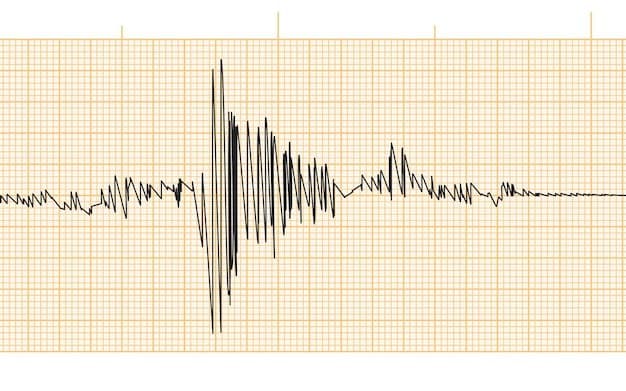
Recent global seismicity remains moderate with no magnitude 6.0+ events recorded in the past 48 hours per USGS data, following several M6.0+ quakes earlier in August including events in Japan, Indonesia, and the Philippines. These regions sit along active subduction zones and transform faults in the Pacific Ring of Fire, where historical rates show multiple M6+ occurrences annually. With only days remaining until the August 31 UTC deadline, trader focus centers on ongoing USGS monitoring and any late-month activity in high-probability areas such as the Philippines or Indonesia. Model consensus and aftershock sequences from prior events provide limited short-term guidance, while quiet periods in the United States and Chile reduce near-term odds there absent sudden changes in seismic catalogs.
Experimental AI-generated summary referencing Polymarket data. This is not trading advice and plays no role in how this market resolves. · UpdatedWhere will a 6.0+ earthquake occur by end of August?
Where will a 6.0+ earthquake occur by end of August?
$24,985 Vol.

Indonesia
99%

Peru
99%

Japan
98%

United States
14%

Mexico
9%

Chile
49%

Philippines
43%
$24,985 Vol.
Indonesia
99%
Peru
99%
Japan
98%
United States
14%
Mexico
9%
Chile
49%
Philippines
43%
A qualifying earthquake must be counted for a country's market only if USGS attributes its location to that country (or its offshore territory) in the event's location description, lists the earthquake with a preferred magnitude of 6.0 or higher, and lists it as occurring within the specified timeframe. Earthquakes without a preferred magnitude classification will not qualify.
If an earthquake with an origin time within a market's window has not yet appeared on the resolution source by the end of the third calendar day after the specified month, this market end date may be extended for up to one week after the specified month and will resolve based on the first preferred magnitude, country attribution and timestamp of the event in question. If the relevant data is not released by the end of the extension period, this market will resolve based on the data released up until that point.
Revisions to the underlying data, such as country attribution and preferred magnitude, will be considered until the end of the third calendar day after the specified month or until the end of an applicable extension period. Revisions made after the end of the third calendar day after the specified month or after the end of an applicable extension period will not be considered.
The resolution source for this event is the United States Geological Survey (USGS) Earthquake Hazards Program earthquake catalog (https://earthquake.usgs.gov/earthquakes/search/), and only data released by USGS will be considered, regardless of other sources. If the resolution source becomes temporarily unavailable, the market will remain open until it resumes; if it remains unavailable through the end of the third calendar day after the specified month, this market will resolve to "No."
Market Opened: Aug 11, 2026, 6:03 PM ET
Resolution Source
https://earthquake.usgs.gov/earthquakes/search/Resolver
0x65070BE91...A qualifying earthquake must be counted for a country's market only if USGS attributes its location to that country (or its offshore territory) in the event's location description, lists the earthquake with a preferred magnitude of 6.0 or higher, and lists it as occurring within the specified timeframe. Earthquakes without a preferred magnitude classification will not qualify.
If an earthquake with an origin time within a market's window has not yet appeared on the resolution source by the end of the third calendar day after the specified month, this market end date may be extended for up to one week after the specified month and will resolve based on the first preferred magnitude, country attribution and timestamp of the event in question. If the relevant data is not released by the end of the extension period, this market will resolve based on the data released up until that point.
Revisions to the underlying data, such as country attribution and preferred magnitude, will be considered until the end of the third calendar day after the specified month or until the end of an applicable extension period. Revisions made after the end of the third calendar day after the specified month or after the end of an applicable extension period will not be considered.
The resolution source for this event is the United States Geological Survey (USGS) Earthquake Hazards Program earthquake catalog (https://earthquake.usgs.gov/earthquakes/search/), and only data released by USGS will be considered, regardless of other sources. If the resolution source becomes temporarily unavailable, the market will remain open until it resumes; if it remains unavailable through the end of the third calendar day after the specified month, this market will resolve to "No."
Resolution Source
https://earthquake.usgs.gov/earthquakes/search/Resolver
0x65070BE91...Recent global seismicity remains moderate with no magnitude 6.0+ events recorded in the past 48 hours per USGS data, following several M6.0+ quakes earlier in August including events in Japan, Indonesia, and the Philippines. These regions sit along active subduction zones and transform faults in the Pacific Ring of Fire, where historical rates show multiple M6+ occurrences annually. With only days remaining until the August 31 UTC deadline, trader focus centers on ongoing USGS monitoring and any late-month activity in high-probability areas such as the Philippines or Indonesia. Model consensus and aftershock sequences from prior events provide limited short-term guidance, while quiet periods in the United States and Chile reduce near-term odds there absent sudden changes in seismic catalogs.
Experimental AI-generated summary referencing Polymarket data. This is not trading advice and plays no role in how this market resolves. · Updated
Beware of external links.
Beware of external links.
Frequently Asked Questions