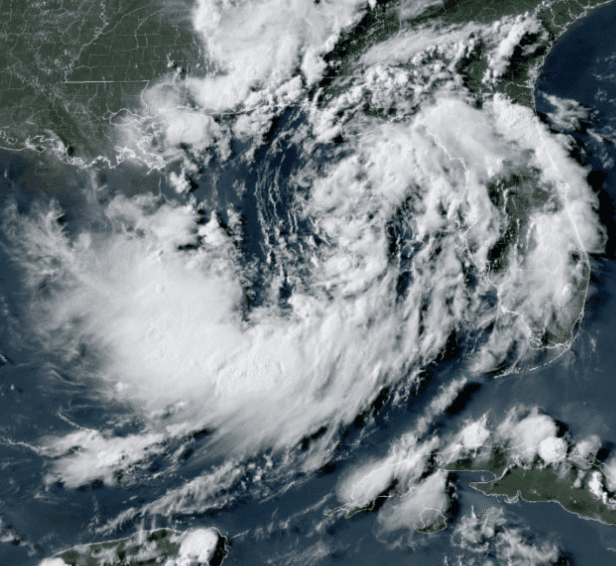
Recent National Hurricane Center advisories and intensity guidance provide the main catalyst for the 74% market-implied probability that Tropical Storm Lowell reaches hurricane strength. The system formed on August 27 with 35-kt winds over the eastern Pacific, where warm sea surface temperatures and light-to-moderate easterly shear support steady intensification. Official forecasts project it attaining 65 kt by 72 hours and note a realistic chance of hurricane status by Saturday night. Traders appear to weigh this consensus against typical model spread and the storm’s remote location, which limits rapid environmental changes. Updated NHC model runs and satellite observations over the next 48 hours will be key data points for further probability shifts.
Experimental AI-generated summary referencing Polymarket data. This is not trading advice and plays no role in how this market resolves. · UpdatedWill Tropical Storm Lowell strengthen to a hurricane?
Will Tropical Storm Lowell strengthen to a hurricane?
Lowell reaches hurricane strength if it attains a maximum sustained wind speed (1-minute average) of at least 74 mph, corresponding to Category 1 or higher on the Saffir-Simpson Hurricane Wind Scale, as reported by the National Hurricane Center. Reaching hurricane strength at any single advisory during the market's timeframe is sufficient to resolve this market to "Yes", regardless of the storm's intensity at other times.
The primary resolution source for this market will be the operational advisories issued by the National Hurricane Center (https://www.nhc.noaa.gov/). If Lowell is located outside the National Hurricane Center's area of responsibility, the maximum sustained wind speed reported by the responsible Regional Specialized Meteorological Center will be used.
This market will resolve based on the operational advisory data issued while the storm is active. Any revisions to the storm's peak intensity or category published later in a post-storm best-track report or Tropical Cyclone Report will not be considered for this market's resolution.
If Lowell does not reach hurricane strength by September 8, 2026, 11:59 PM ET, or dissipates before reaching hurricane strength, this market will resolve to "No".
Market Opened: Aug 27, 2026, 5:18 PM ET
Resolution Source
https://www.nhc.noaa.gov/Resolver
0x65070BE91...Lowell reaches hurricane strength if it attains a maximum sustained wind speed (1-minute average) of at least 74 mph, corresponding to Category 1 or higher on the Saffir-Simpson Hurricane Wind Scale, as reported by the National Hurricane Center. Reaching hurricane strength at any single advisory during the market's timeframe is sufficient to resolve this market to "Yes", regardless of the storm's intensity at other times.
The primary resolution source for this market will be the operational advisories issued by the National Hurricane Center (https://www.nhc.noaa.gov/). If Lowell is located outside the National Hurricane Center's area of responsibility, the maximum sustained wind speed reported by the responsible Regional Specialized Meteorological Center will be used.
This market will resolve based on the operational advisory data issued while the storm is active. Any revisions to the storm's peak intensity or category published later in a post-storm best-track report or Tropical Cyclone Report will not be considered for this market's resolution.
If Lowell does not reach hurricane strength by September 8, 2026, 11:59 PM ET, or dissipates before reaching hurricane strength, this market will resolve to "No".
Resolution Source
https://www.nhc.noaa.gov/Resolver
0x65070BE91...Recent National Hurricane Center advisories and intensity guidance provide the main catalyst for the 74% market-implied probability that Tropical Storm Lowell reaches hurricane strength. The system formed on August 27 with 35-kt winds over the eastern Pacific, where warm sea surface temperatures and light-to-moderate easterly shear support steady intensification. Official forecasts project it attaining 65 kt by 72 hours and note a realistic chance of hurricane status by Saturday night. Traders appear to weigh this consensus against typical model spread and the storm’s remote location, which limits rapid environmental changes. Updated NHC model runs and satellite observations over the next 48 hours will be key data points for further probability shifts.
Experimental AI-generated summary referencing Polymarket data. This is not trading advice and plays no role in how this market resolves. · Updated
Beware of external links.
Beware of external links.
Frequently Asked Questions